
Why Da Nang is worth talking about, financially
One honest caveat before we get into the numbers: Da Nang in 2026 is not Da Nang in 2022. The city has been on every digital nomad list for two years running, and the prices know it. If you visited a few years ago and remember paying next to nothing, those days are gone. Rents are up, the An Thuong strip has repriced itself for tourists, and "hidden gem" is no longer accurate. It's still significantly cheaper than Hanoi or Saigon - but it's no longer cheap compared to what it used to be.
So where does that leave you? Still ahead. Based on Numbeo's Cost of Living Plus Rent Index, living costs in Da Nang are 9.3% lower than Hanoi and 16.3% lower than Ho Chi Minh City. That gap is mostly rent, and rent is the single biggest variable in your monthly total. The three tiers below break down exactly what different budgets get you, from living locally in a real neighborhood to a beachfront apartment with no trade-offs.
The exchange rate sits at roughly 25,500 VND to $1.
The Three Budget Tiers
Tier 1: The Lean Expat
My Khe Beach is where most expats cluster - the cafes, the bars, the An Thuong strip. At this tier, you're not living there. You're either further up the coast in Son Tra, where the beach is quieter and the neighborhood is more local, or you're on the city side in Hai Chau, where the beach is a ride away but the rent reflects it.
Both are perfectly livable. Son Tra still gives you beach access without the tourist markup. Hai Chau puts you in the middle of daily Vietnamese life - wet markets, local pho spots, a shorter commute to nowhere in particular. The trade-off in either case is the same: you're a step removed from the expat social scene, and if that scene matters to you, the distance adds up faster than the savings.
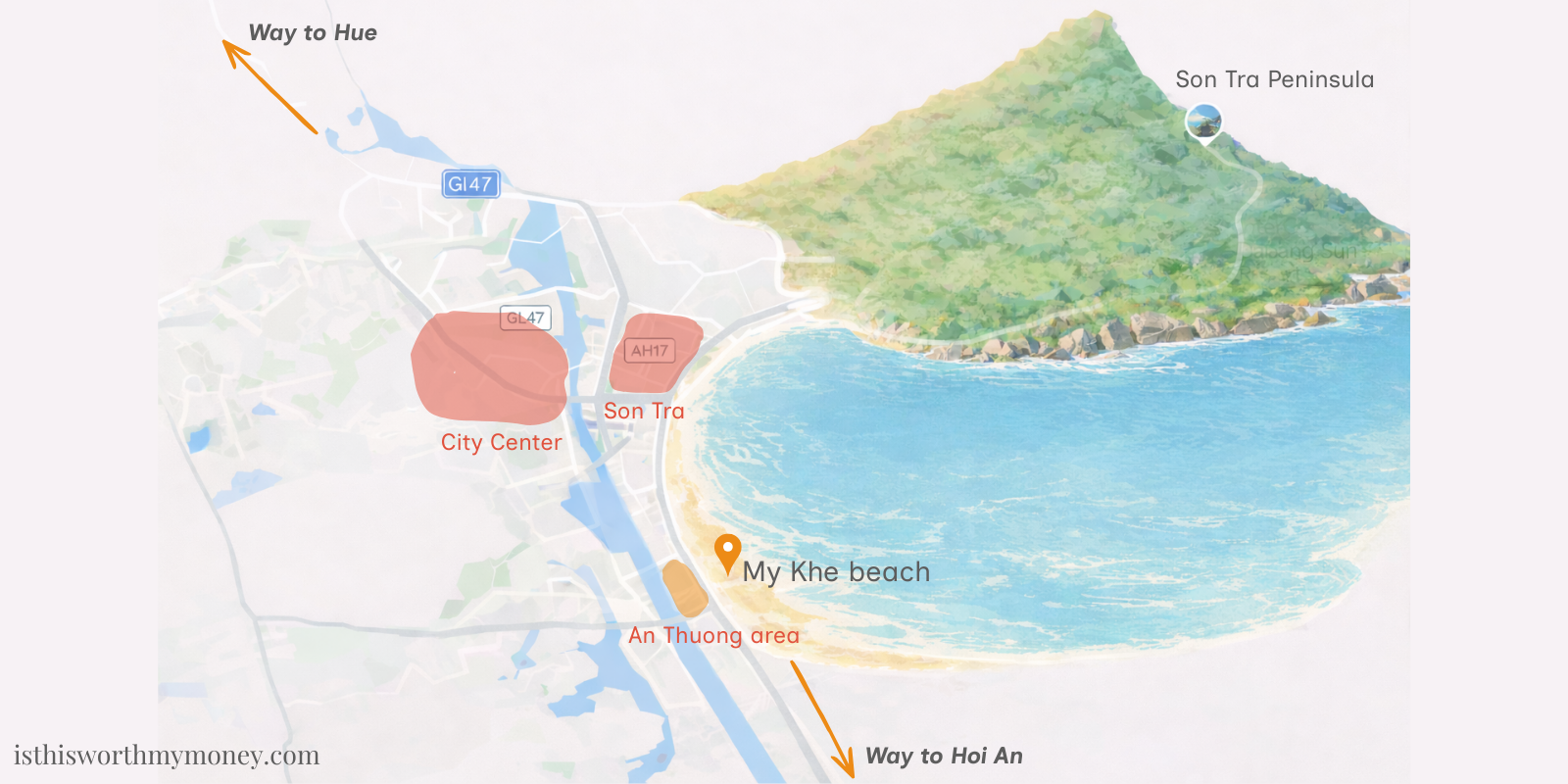
What you're trading: proximity to My Khe, the main expat strip, and the community around it.
What you're getting: genuine affordability in a real neighborhood, and enough left over to save seriously or take weekend trips to Hoi An.
| Category | Monthly Cost |
|---|---|
| Rent (studio or 1BR, Son Tra local or Hai Chau) | $250–350 |
| Utilities (electricity + water) | $30–50 |
| Internet + phone | $12–18 |
| Food (mostly local restaurants, occasional cooking) | $180–250 |
| Transport (motorbike rental or Grab) | $60–90 |
| Personal care + household | $30–50 |
| Entertainment + social | $50–80 |
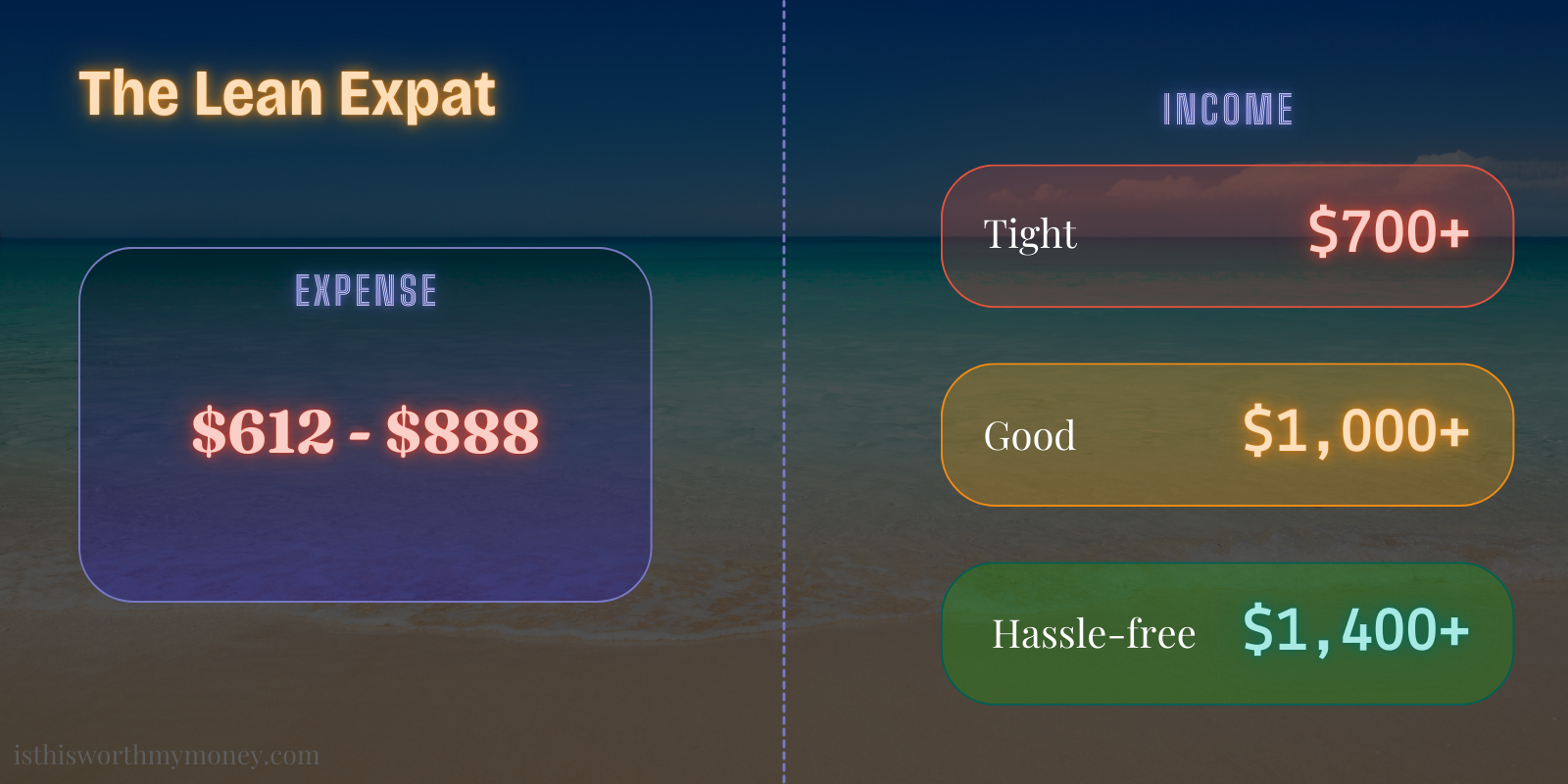
| Total | ~$612–888 |
What this life actually looks like: Your studio is small but your expenses are smaller. Mi Quang for breakfast at 35,000 VND, coffee at a spot where you're the only foreigner and nobody's trying to practice English on you. Your neighbors are Vietnamese, your landlord communicates mostly through gestures, and the wet market two streets over is cheaper than any supermarket you've ever been to. It's not a hardship post. It's just the city without the filter.
What tends to blow the budget: The stormy and rainy season. September to December in Da Nang isn't a light drizzle situation. October alone brings 18-22 rainy days, some of them all-day affairs. You'll Grab more, cook less, and spend more time in cafes waiting it out. Factor in an extra $30-50/month for those four months.
The other hidden cost: cheap apartments and Da Nang rain are not a great combination. Mold moves in quietly and fast, and by November a surprising number of Tier 1 expats are either shopping for a dehumidifier, upgrading their apartment, or just... leaving for a bit. None of those are free.
The income math:
- $700-900: You can make it work, but there's no cushion. One bad month - a hospital visit, a motorbike that decides to quit on you, or a visa situation you misread and now need to fix urgently - and you're borrowing from next month. It's manageable until it isn't.
- $1,000-1,200: Comfortable at this tier. Enough buffer to save, handle surprises without panic, and still make it to Hoi An on a Sunday without doing mental math first.
- $1,400+: You're over-earning for what this tier offers. The extra income deserves a better apartment - one that won't grow mold in October. And meals that go beyond the local rotation. Moving up to Tier 2 is a straightforward upgrade at this point.
Tier 2: The Comfortable Expat
This is where most working expats in Da Nang land, and honestly, it's a pretty sweet spot to land.
You're in My An or An Thuong, right in the heart of the expat scene. The beach is a 10-minute walk. The Vietnamese coffee is strong, cheap, and has quietly become a non-negotiable part of your morning. You're not doing the mental gymnastics of "is this Grab ride worth it" anymore because most things are walkable anyway. You eat where you want, when you want, and you don't check the bill twice.
What you're trading: Not much. Maybe a sea view.
What you're getting: A proper furnished apartment, a neighborhood that actually has things going on, and enough buffer that a surprise expense feels annoying rather than catastrophic.
| Category | Monthly Cost |
|---|---|
| Rent (1BR, My An or An Thuong, expat-area building) | $400–700 |
| Utilities (electricity + water) | $50–80 |
| Internet + phone | $18–25 |
| Food (mix of local, Western restaurants, groceries) | $250–350 |
| Transport (motorbike rental + occasional Grab) | $60–100 |
| Personal care + household (weekly cleaner) | $70–90 |
| Entertainment, subscriptions, cafes, going out | $100–200 |
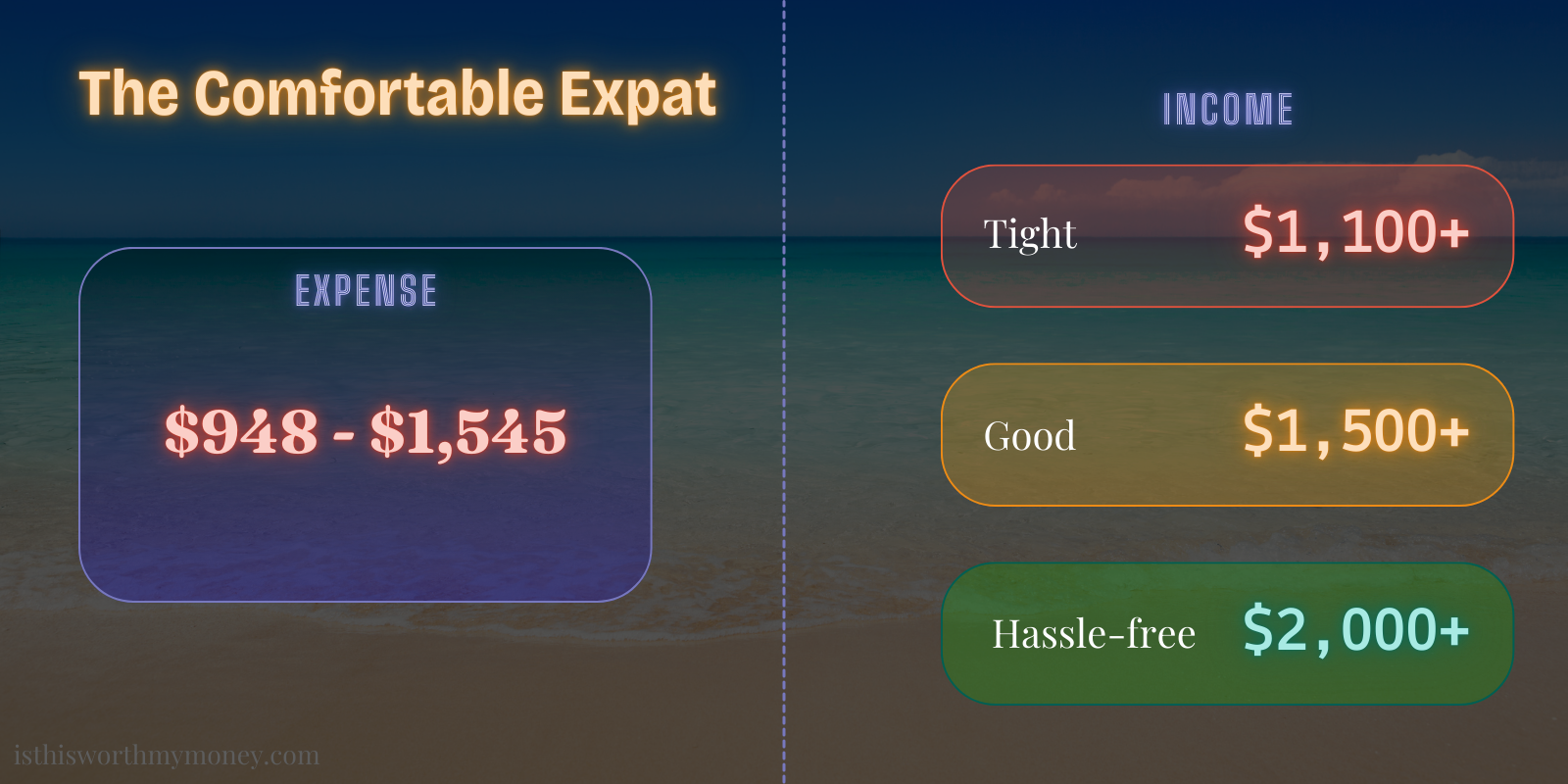
| Total | ~$948–1,545 |
What this life actually looks like: You wake up, crack the window, and there's a beach breeze doing its thing. Breakfast is at a cafe where you're simultaneously eating, working, and pretending you're in a coffee commercial. Lunch is somewhere with an actual menu and options that aren't just pho. Afternoon? Beach. Because it's right there and you live here now - you can do that. You've joined a real gym ($20-30/month) which you go to just enough to feel good about it. Evenings at the bar in An Thuong where the staff already knows your order. Hoi An on a whim Saturday morning because it's 30 minutes away and why not.
What tends to blow the budget: Slow creep. Da Nang has figured out that expats have money, and the An Thuong area is quietly repricing itself accordingly. Rental prices in My An, An Thuong, and Son Tra went up 4-6% in Q4 2025 alone, and the bars and restaurants on the strip are increasingly charging tourist prices to people who technically live there. It's not dramatic - it's just one nice dinner here, one overpriced G&T there, and suddenly you're at the top of the range wondering where the month went. Cooking at home two or three nights a week is genuinely the difference between $950 and $1,500.
The income math:
- $1,100-1,300: Doable, but tight at the top of the range.
- $1,500-1,800: The sweet spot. Comfortable, no counting, money moving to savings.
- $2,000+: You're over-earning for this tier. If you're happy where you are, that's fine - but put the gap to work. Max out an emergency fund, invest the difference, or start taking those weekend trips to Hoi An and upgrade them to a nice hotel stay. If the itch for more space or a sea view is there, Tier 3 is right there waiting.
Tier 3: Living Well
Somewhere in Sydney or Barcelona, someone is paying $3,000 a month for a one-bedroom with a parking spot and a view of a brick wall. At this tier in Da Nang, that same budget gets you a sea-view apartment, a pool downstairs, and a beach you can walk to before your morning coffee gets cold.
The math is almost offensive.
What you're getting: The best the city offers, without compromises, and still likely saving more than you would anywhere else.
| Category | Monthly Cost |
|---|---|
| Rent (sea-view 1BR or serviced apartment near My Khe) | $700–1,400 |
| Utilities (electricity + water) | $80–140 |
| Internet + phone | $25–30 |
| Food (restaurants freely, quality groceries) | $400–700 |
| Transport (motorbike + frequent Grab, occasional taxi) | $80–160 |
| Personal care + household + regular cleaner | $120–200 |
| Entertainment, travel, subscriptions | $180–300 |
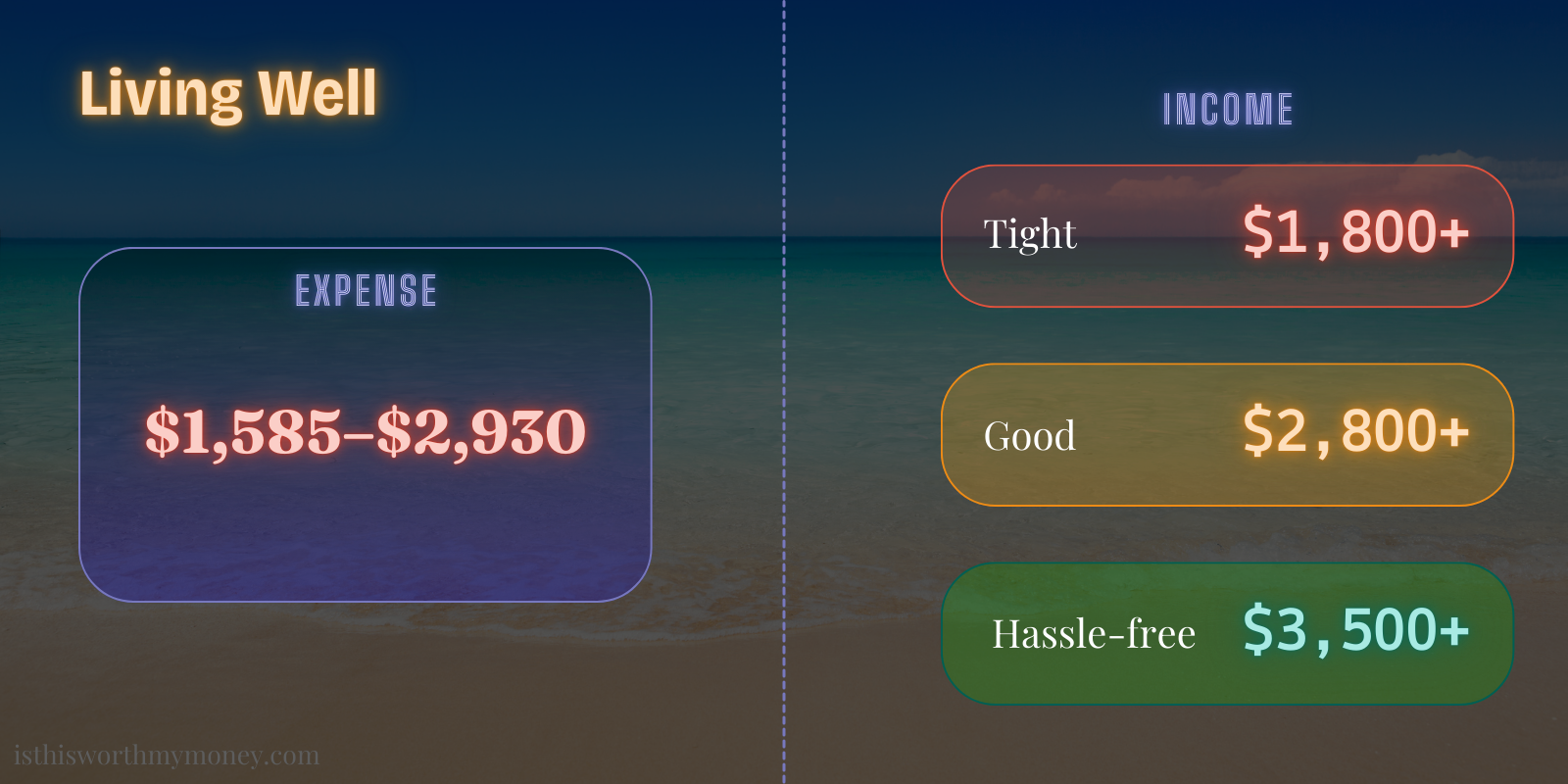
| Total | ~$1,585–2,930 |
What this life actually looks like: Your balcony faces the ocean, and yes, you've already taken seventeen photos of the same sunset. You go to Hoi An for a long lunch on a Tuesday because no one's stopping you. Fine dining is no longer a special occasion thing. It's just a Tuesday, the wine is good, and the bill doesn't ruin your evening. The beach isn't a weekend treat, it's just where you go when you feel like it, which is often. Your apartment has a pool. You have a cleaner. And somehow, after all of that, you're still spending half of what this exact lifestyle would cost you in Lisbon or Melbourne.
What tends to blow the budget: International health insurance, which isn't in the table above. Private plans run $50-150/month depending on coverage, and at this tier it's a line item, not a surprise. Budget for it upfront or you'll feel it later.
The rainy season also hits differently at Tier 3. You paid for an ocean view, and from October to December, that ocean view comes with horizontal rain, a potentially leaking balcony, and the road to the beach turning into a small river. Not every building handles it well. Check the drainage, check the windows, check what the unit above yours looks like before signing anything.
The income math:
- $1,800-2,300: Technically works, but there's not much cushion. You're at Tier 3 prices on a Tier 2 budget, which is fine until something unplanned shows up.
- $2,800+: This is the number. Comfortable, covered, nothing to stress about.
- $3,500+: You're living well, saving properly, and the rainy season stops being a problem because you can just not be here for it. Bangkok for two weeks, Bali for one, back in Da Nang by December when the weather sorts itself out. It's not running away , it's just smart scheduling.
Other Costs to Know About
The expat tax
These are the costs that don't show up in any tier's table but will show up in your life.
- Healthcare: Local clinics are affordable, but most expats use private international options for anything serious. A visit to a general practitioner runs $10-20, and private insurance costs $50-150/month depending on coverage.
- Visa costs: E-visas run $25-50 every 90 days. A visa run means a flight out and potentially a few nights abroad - budget $100-400 depending on how you do it.
- Rainy season planning: Yes, this is the third time we've brought it up. No, we're not sorry. October and November can be genuinely relentless, and if you sign a lease starting in August without a plan for those months, you'll understand why we kept mentioning it. Budget for it, or book a flight out of it. Either works.
- ATM and transfer fees: Same story as anywhere in Vietnam. ATMs cap withdrawals and charge $1-3 per transaction. Wise + a fee-reimbursing card fixes this.
One-time move-in costs
Most expat-facing apartments come furnished, but "furnished" is a loose term.
The bed exists. Whether it meets Western standards of what a bed should feel like is a separate question, and the answer is usually no. Budget for a mattress replacement or a thick topper within the first month. After that: a dehumidifier for the rainy season, a second screen because you're working from home and the setup needs to be right, a standing desk because it's $35 and your physiotherapist would approve, and a pickleball racket because somehow everyone in Da Nang plays pickleball now.
Vietnam is dangerously affordable and your apartment will reflect that by month two.
| Item | Cost |
|---|---|
| Deposit (1-2 months rent) | $220–1,200 |
| Furniture + appliances (if unfurnished) | $400–1,200 |
| Total | ~$220–2,400 |
One practical tip: Spend your first month in a serviced apartment while looking for a permanent place. The My An area has plenty of short-term options. Trying to lock in a lease from abroad is how people end up in the wrong neighborhood or overpaying for something they'd never have chosen in person.
How Da Nang Compares to the Rest of Vietnam
| Da Nang | Hanoi | Ho Chi Minh City | |
|---|---|---|---|
| Rent (1BR, decent area) | $350–550 | $500–700 | $600–900 |
| What $1,200 gets you | Very comfortable (beach-adjacent apartment, money left over) | Comfortable (good apartment, eat out freely, gym) | Tight (works, but you'll feel it on a social month) |
| Vibe | Slower pace, beach life, nature, growing expat scene | Seasons, culture, history, chaos, cuisine | Always-on energy, better nightlife, hotter career scene |
| The trade-off | Rainy season is serious, less going on socially | Higher rents, pollution, hot summers | Most expensive, most intense |
The Bottom Line
Da Nang in 2026 is one of the most financially efficient places in Southeast Asia to live well. The sweet spot for most single expats is Tier 2 - somewhere between $1,000-1,400/month. Enough to live genuinely comfortably, absorb surprises, and save meaningfully. Tier 1 works if you're maximizing savings or getting started. Tier 3 makes sense if you're earning well and want a beachfront life without the price tag that usually comes with one.
The honest summary: almost any budget that buys you a mediocre life in a Western city buys you a comfortable one in Da Nang. The beach is real, the food is great, and the pace is genuinely good. Just go in with eyes open about September through December, it's not a dealbreaker, but it's not something to discover after you sign a lease.