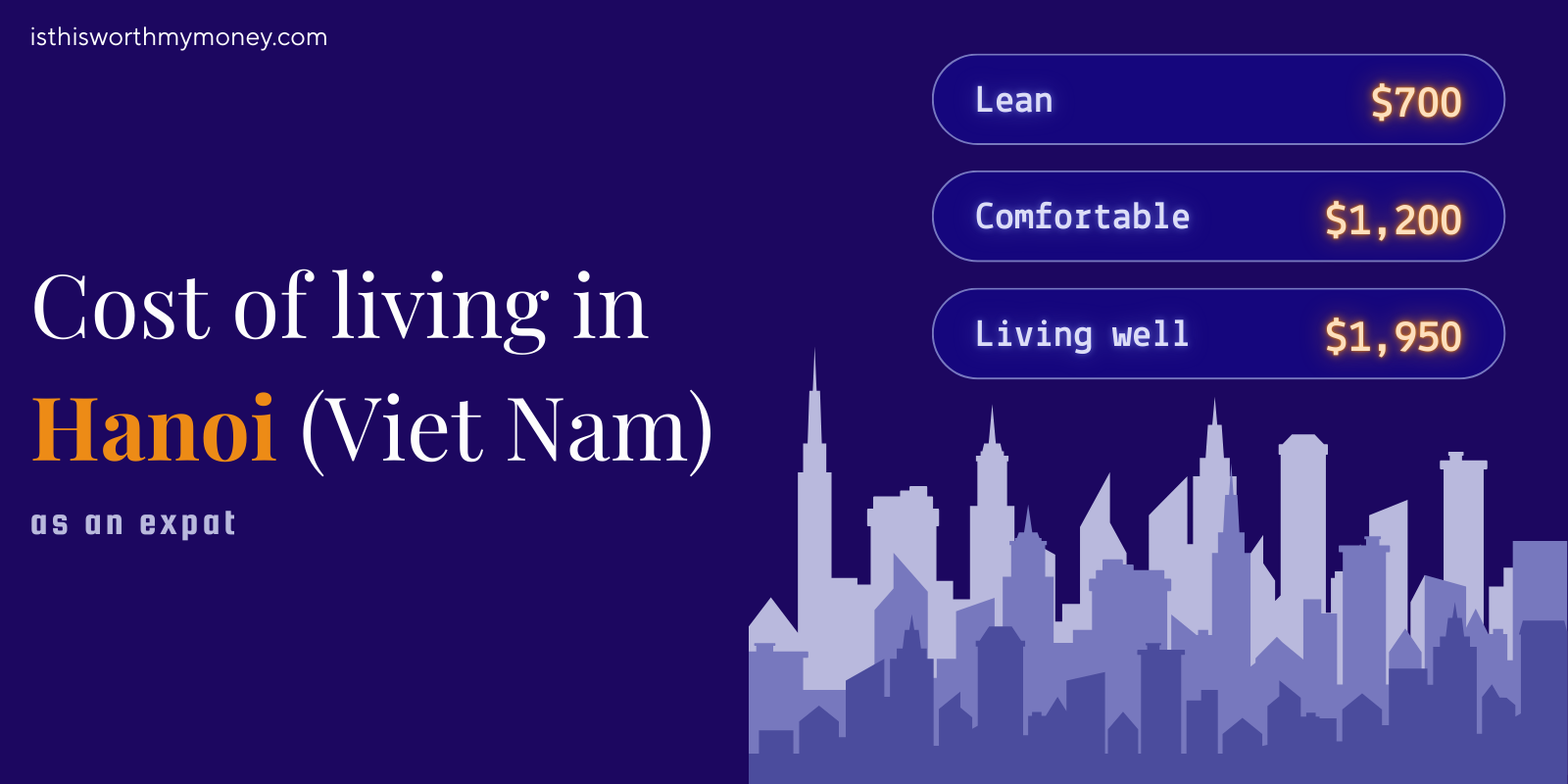
Hanoi can be extremely affordable. It can also quietly drain your wallet if you're not paying attention. The difference between those two outcomes isn't luck, it's mostly about which version of the city you're living in.
This post breaks down three realistic monthly budgets for a single expat in Hanoi in 2026, what each one actually looks like day-to-day, and how the numbers compare to what you'd spend in cities like London, Sydney, or New York.
Why Hanoi is still worth talking about, financially
Hanoi isn't as cheap as it was five years ago. Rents in popular expat areas have been climbing 3-5% annually, and the supply of genuinely good apartments is tighter than it looks online. That said, the gap between what you pay and what you get is still enormous compared to most Western cities.
For now, the basics: the exchange rate sits at roughly 25,500 VND to $1 USD, and most everyday expenses (think food, transport, services) are a fraction of Western equivalents. Rent is where the range gets wide, and it's the single biggest variable in your monthly total.
The Three Budget Tiers
Tier 1: The Lean Expat
This tier means you're living in Hanoi's city, not the expat version of it. Your neighborhood is local, your food is local, and your social life will naturally mix more with Vietnamese people and long-term residents than with the revolving door of newcomers in Tay Ho.
For some people that's exactly the draw. For others - if you find yourself craving familiar comforts, Western groceries, or an English-speaking community close by - the friction adds up faster than the savings.
What you're trading: a central location, building amenities, and convenience.
What you're getting: a genuinely affordable life in a real neighborhood, and enough left over to save seriously or travel often.
| Category | Monthly Cost |
|---|---|
| Rent (studio, outer districts) | $300–400 |
| Utilities (electricity + water) | $30–60 |
| Internet + phone | $15–20 |
| Food (mostly local restaurants + some cooking) | $220–300 |
| Transport (Grab + occasional motorbike) | $50–100 |
| Personal care + household supplies | $30–50 |
| Entertainment + social | $50–80 |
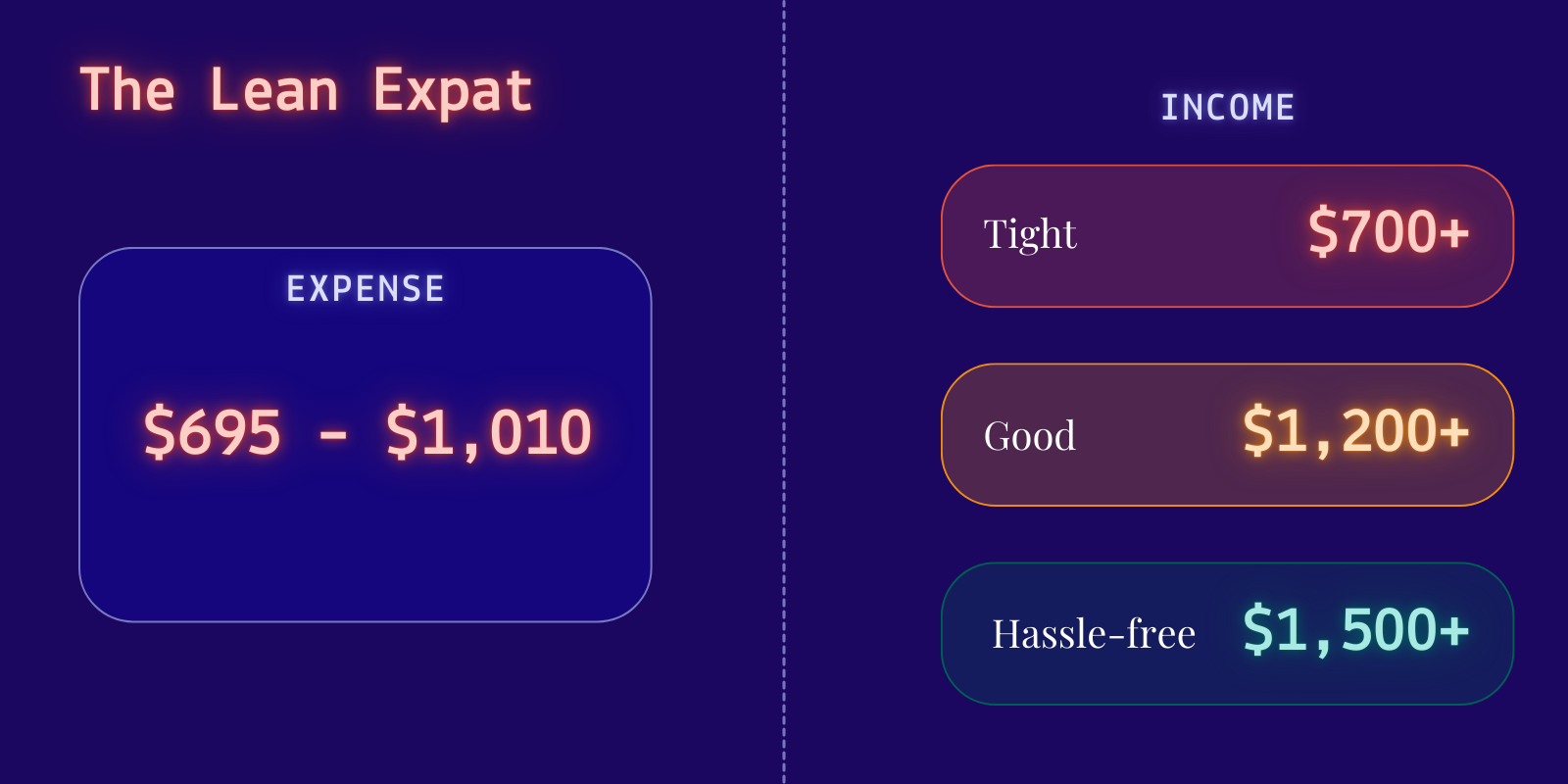
| Total | ~$695–1,010 |
What this life actually looks like: You're working from home or cafes where a coffee and three hours of wifi costs $2. Pho or bun cha for breakfast most mornings, a proper sit-down lunch for under $3. You've figured out the wet market near your apartment. Weekends might mean bia hoi with friends at 25,000 VND a glass, or a $30 overnight bus to Ninh Binh.
What tends to blow the budget: Electricity in summer. Hanoi gets genuinely hot from May to September, and running AC more than a few hours a day can push your electricity bill from $25 to $70-90. It's the one cost that surprises almost everyone in their first Hanoi summer, factoring in an extra $40-60/month for that period.
The income math:
- $700-1,000: You can make it work, but you're walking on eggshells. One bad month (think a hospital visit, a broken laptop) and you're in trouble.
- $1,200: Comfortable. Enough left over to build a small buffer for surprises or short vacations.
- $1,500-1,800: Hassle-free at this tier. Stay disciplined for 6+ months and you can move up to Tier 2.
Tier 2: The Comfortable Expat
This is the most common landing spot for working expats in Hanoi, and it's a genuinely good life.
The trade-off at this tier isn't really about sacrifice, it's about choosing between a central apartment with amenities or a slightly bigger place a bit further out. You're not counting meals. You're not optimizing Grab routes. But you're also not in a lakeside penthouse, and the expat social scene in Tay Ho might cost more than your budget comfortably allows if you're not paying attention.
What you're getting: a proper apartment, freedom to eat and drink how you want, and enough room to absorb unexpected expenses without stress.
| Category | Monthly Cost |
|---|---|
| Rent (1BR, mid-tier building, central-ish district) | $500–800 |
| Utilities (electricity + water) | $60–100 |
| Internet + phone | $20–25 |
| Food (mix of local, Western restaurants, groceries) | $300–400 |
| Transport | $80–120 |
| Personal care + household (incl. weekly cleaner) | $80–100 |
| Entertainment, going out, subscriptions | $100–150 |
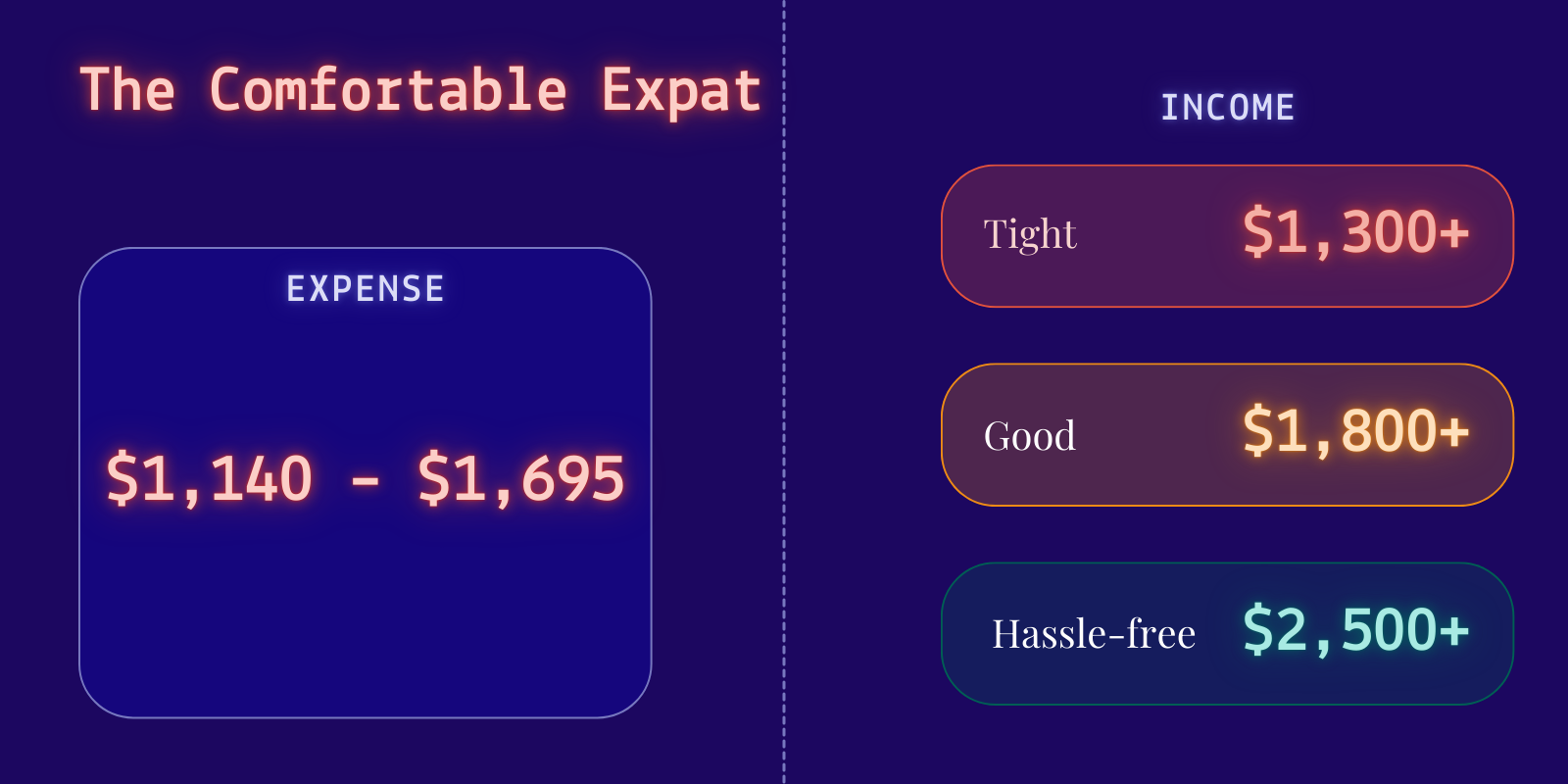
| Total | ~$1,140–1,695 |
What this life actually looks like: Fast fiber internet at home, a cleaner once a week (about $15-20 for a few hours, at this budget it barely registers). You go to a real gym. You eat at places where the menu sometimes exists in English and sometimes absolutely does not. Weekend trips to Ha Long Bay or Hoi An happen without much financial planning. You're comfortable enough that money stops being the thing you think about most.
What tends to blow the budget: Expat drift. Once you're comfortable, it's easy to start defaulting to Western supermarkets for familiar groceries, imported products, and Tay Ho bars where a G&T runs $8. None of that is a problem, but it silently edges you toward the top of this range. Staying conscious of it is worth a few hundred dollars a month.
The income math:
- $1,300-1,500: Doable, but tight at the top of the range. You'll feel it if you have a social month.
- $1,800-2,000: The sweet spot. Comfortable, no counting, small buffer building.
- $2,500+: You're over-earning for this tier. Consider moving up, or saving aggressively.
Tier 3: Living Well
This is a Western-standard lifestyle in a city that still costs a fraction of what that would run you anywhere in Europe or Australia.
The trade-off here isn't really financial, it's whether Hanoi is the right place for this kind of life. At this budget you're mostly insulated from the friction of local infrastructure, the language barrier, and the quirks of Vietnamese apartment living. You can absolutely live this way. The question is whether you're choosing Hanoi for what it is, or just for the arbitrage.
What you're getting: the best the city has to offer, without compromises, and still likely saving more than you would anywhere else.
| Category | Monthly Cost |
|---|---|
| Rent (1BR lake view or serviced apartment, Tay Ho) | $900–1,500 |
| Utilities (electricity + water) | $100–180 |
| Internet + phone | $25–30 |
| Food (restaurants freely, quality groceries) | $450–650 |
| Transport (frequent Grab, occasional taxi) | $120–180 |
| Personal care + household + regular cleaner | $150–200 |
| Entertainment, travel, subscriptions | $200–300 |
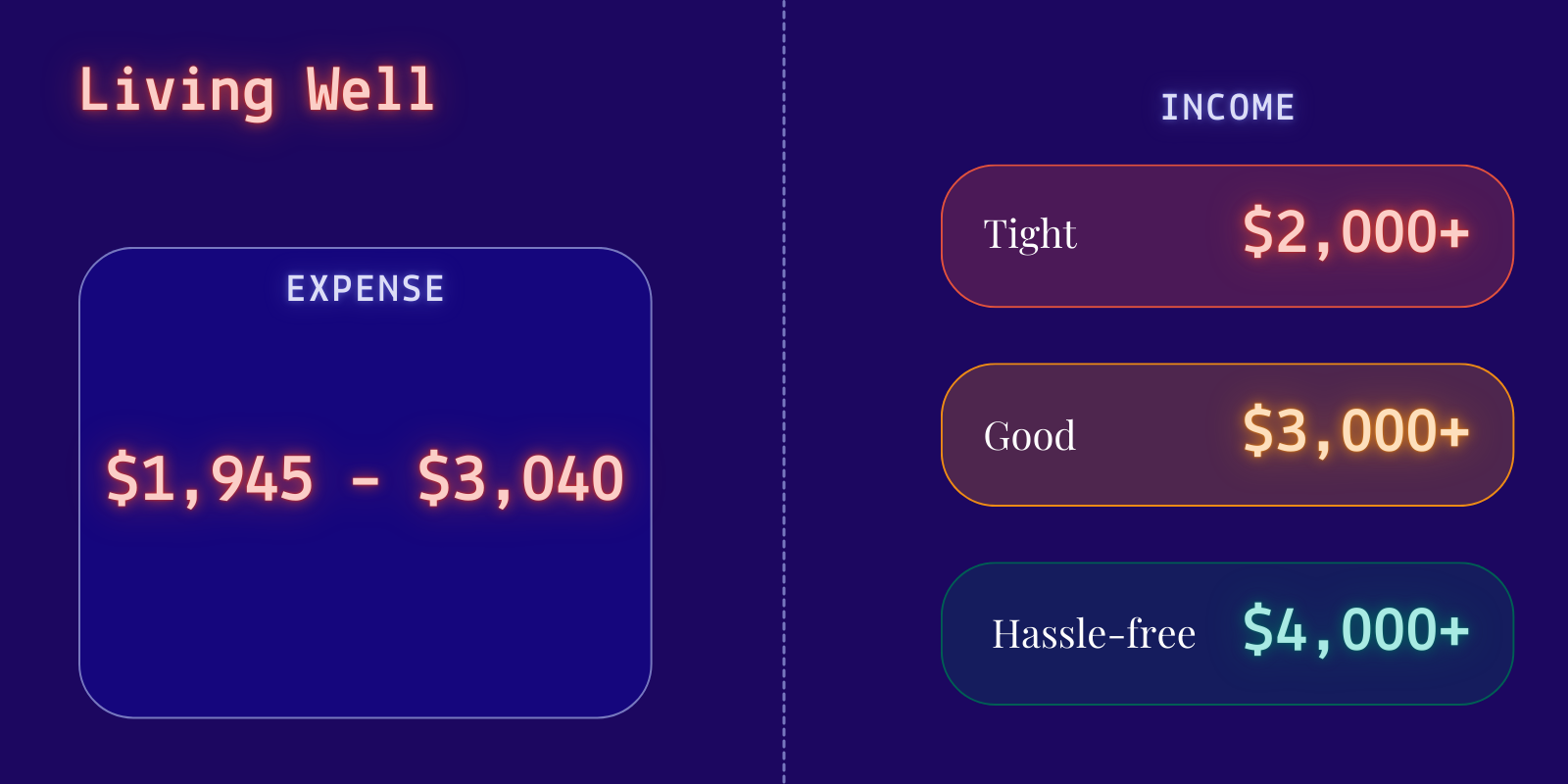
| Total | ~$1,945–3,040 |
What this life actually looks like: Balcony with a West Lake view. Annam Gourmet when you want good cheese or decent wine. Restaurants where you make a reservation. You also still get pho for $2 on Sunday mornings, because Hanoi doesn't let you forget where you are, and honestly that's part of what makes it worth it. What tends to blow the budget: International health insurance. If you want proper coverage, it runs $100-200/month and isn't reflected in the table above. At this tier it's less of a surprise and more of a line item to plan for.
The income math:
- $2,000-2,500: Covers it, but leaves little room. International health insurance will feel like a squeeze.
- $3,000: You're living well with breathing room.
- $4,000+: This is Hanoi at its most comfortable. You're saving seriously while living better than most.
Other Costs to Know About
The expat tax
These are costs that don't show up in any tier's table but will show up in your life. None of them are surprises once you know about them, but most people only find out the hard way.
- Healthcare: Local public hospitals are very affordable but most expats use private international clinics for routine care, expect $50-150 per visit. If you want proper health insurance coverage rather than paying out of pocket, international plans run $40-200/month on top of everything else.
- Visa costs: E-visas run $25-50 every 90 days. If you need a visa run, add a flight, and possibly a few nights abroad. One run can cost $100-400 depending on how you do it.
- International transfer fees: ATMs cap withdrawals at $130-250 and charge $1-3 per transaction. Bank exchange margins take another quiet cut on top. A service like Wise and a fee-reimbursing card fix most of this.
- Tax filing back home: You may still owe taxes in your home country. Worth checking before you go, not after.
One-time move-in costs
Most apartments in Hanoi come furnished - bed, basic appliances, sometimes even an AC unit. If yours doesn't, that's a significant extra cost upfront. Always confirm what's included before signing.
| Item | Cost |
|---|---|
| Deposit (1-2 months rent) | $300–1,500 |
| Furniture + appliances (if unfurnished) | $500–1,500 |
| Total | ~$300–3,000 |
One practical tip: spend your first month in a serviced apartment ($500-700) while you look for a permanent place. Trying to find an apartment from abroad is how people end up overpaying for something they'd never have chosen in person.
How Hanoi Compares to the Rest of Vietnam
Most people deciding on Hanoi are also weighing Ho Chi Minh City and Da Nang. Same country, very different experiences, and the $1,200 budget plays out differently in each.
| Hanoi | Ho Chi Minh City | Da Nang | |
|---|---|---|---|
| Rent (1BR, decent area) | $500–700 | $600–900 | $350–550 |
| What $1,200 gets you | Comfortable (good apartment, eat out freely, gym) | Tight (works, but you'll feel the squeeze on a social month) | Very comfortable (beach-adjacent apartment, money left over) |
| Vibe | Seasons, culture, history, chaos, cuisine | Always-on energy, better nightlife, hotter career scene, vibrant | Slower pace, beach life, smaller expat community, more nature |
| The trade-off | Higher rents, more pollution | Most expensive | Less going on, rainy season is real |
At $1,200, Da Nang gives you the most financial breathing room. HCMC gives you the most city. Hanoi sits in the middle - more affordable than Saigon, more going on than Da Nang, and a noticeably different quality of life once the seasons change.
The Bottom Line
Hanoi in 2026 is still one of the best places in the world to stretch a dollar, even with rents creeping up and the expat premium very much alive.
The sweet spot for most single expats is Tier 2, somewhere between $1,250-1,700/month. Enough to live genuinely well, absorb surprises, and still come out ahead financially. Tier 1 works if you're maximizing savings or just getting started. Tier 3 makes sense if you're earning well and want your daily environment to match.
The honest summary: almost any budget that buys you a mediocre life in a Western city will buy you a comfortable one in Hanoi. Whether that trade-off is worth it depends on what you're looking for, but the numbers are hard to argue with.