Most people see "$799" and think that's what an iPhone costs.
It's not. Not even close.
By the time you add everything up, the actual cost of owning an iPhone is 30-50% higher than the sticker price. And that's before we talk about how many hours of your life you're trading for it.
Let's do the real math.
Step 1: Start with your income
Look at your paycheck before you look at any phone.
A $999 iPhone on different incomes:
| Monthly Income | % of Income | Hours of Work | Work Time to Pay It Off |
|---|---|---|---|
| $1,000/month | 100% | 160 hours | 4 weeks (a full month) |
| $2,500/month | 40% | 133 hours | 3 weeks 2 days |
| $3,500/month | 29% | 95 hours | 2 weeks 2 days |
| $4,500/month | 22% | 74 hours | 1 week 4 days |
| $6,000/month | 17% | 55 hours | 1 week 2 days |
*Based on 40 hours work week
This isn't about whether you "should" buy one. It's about knowing what you're trading for it. "2.4 weeks of my life" hits different than "$41.62/month."
Step 2: The price you'll actually pay (it's not the one on Apple's website)
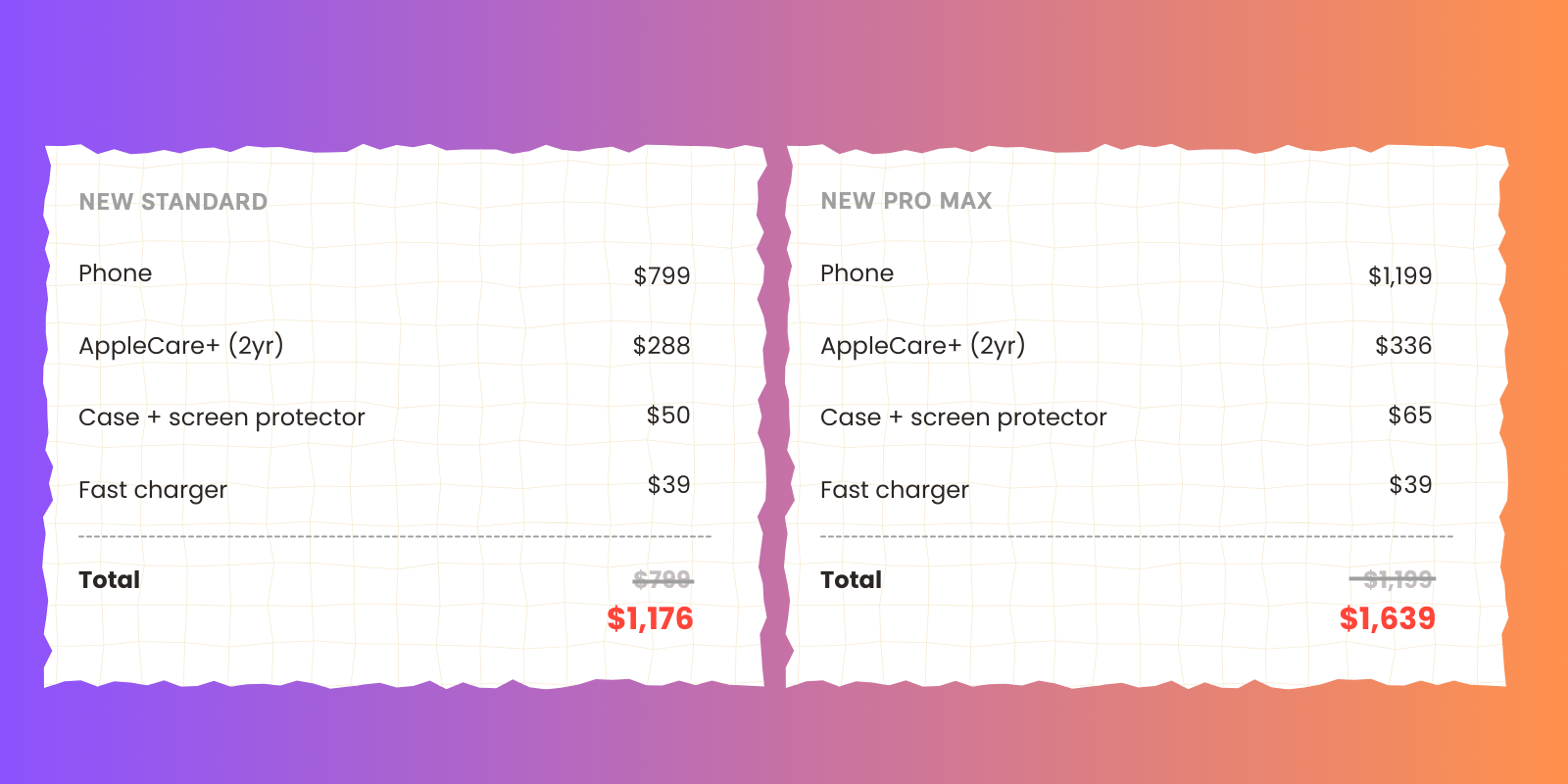
Apple's starting prices look clean. But almost nobody walks out paying the advertised number.
Iphone lineup (What you think you pay)
| Model | Starting Price |
|---|---|
| Previous gen standard | $699 |
| New standard model | $799 |
| New mid-tier (Air) | $999 |
| New Pro | $1,099 |
| New Pro Max | $1,199 |
What you actually pay
Step 3: The costs that keep going after you buy
Buying the phone is just the start. Here's what keeps charging you:
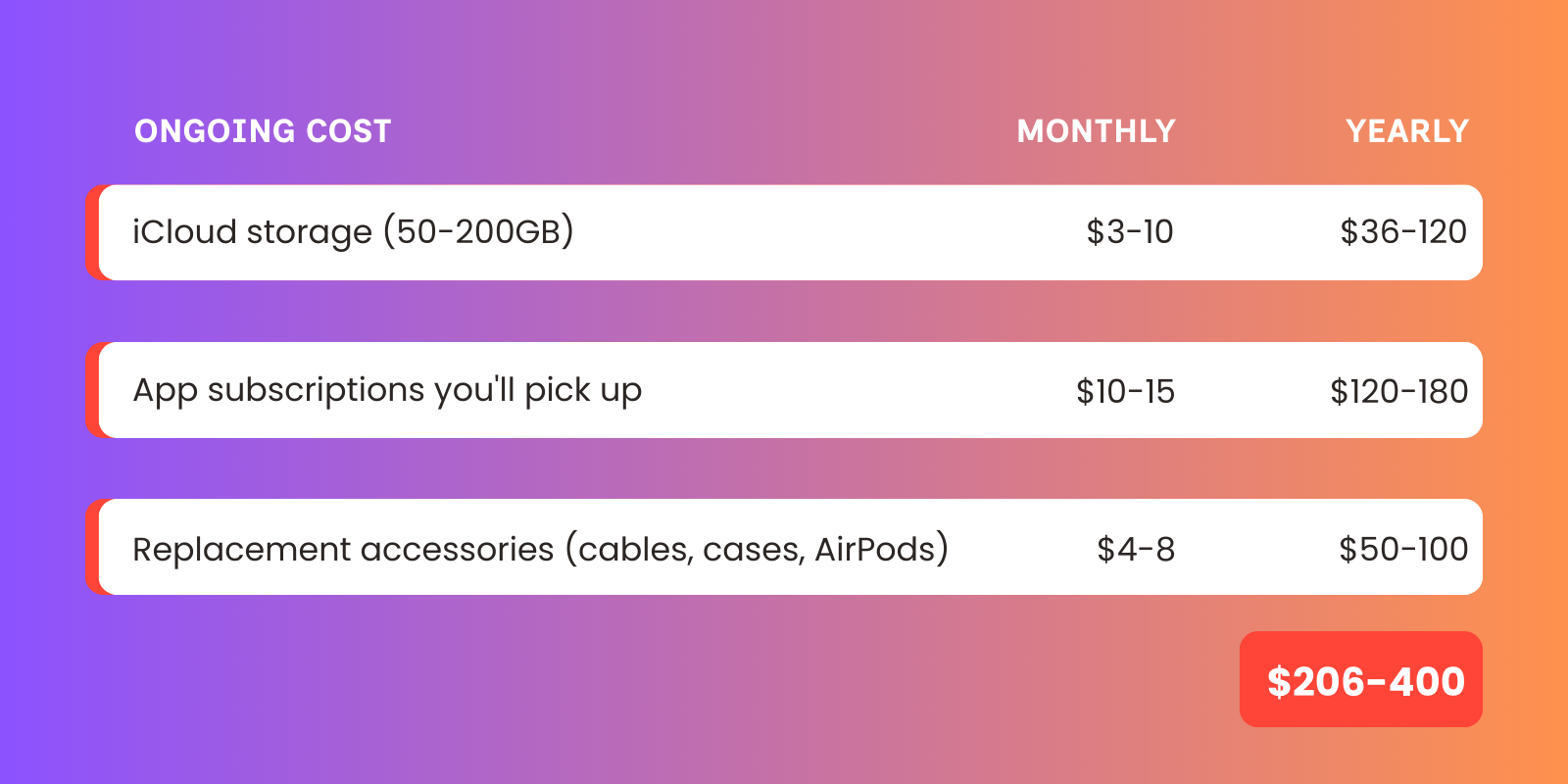
Apple gives you 5GB of free iCloud. That fills up in about a week if you take photos. You'll be paying for storage.
Step 4: The ecosystem trap (let's be honest about this)
The iPhone isn't just a phone purchase. It's the entry ticket to an entire ecosystem. And once you're in, leaving gets harder every year.
If you already own AirPods, Apple Watch, or a Mac: the iPhone genuinely works better with all of them. AirDrop, shared clipboard, Find My, iMessage. That integration is real value, and it's something Android can't fully match.
If you don't own any Apple products: the iPhone is rarely the last Apple product you buy. It's the first.
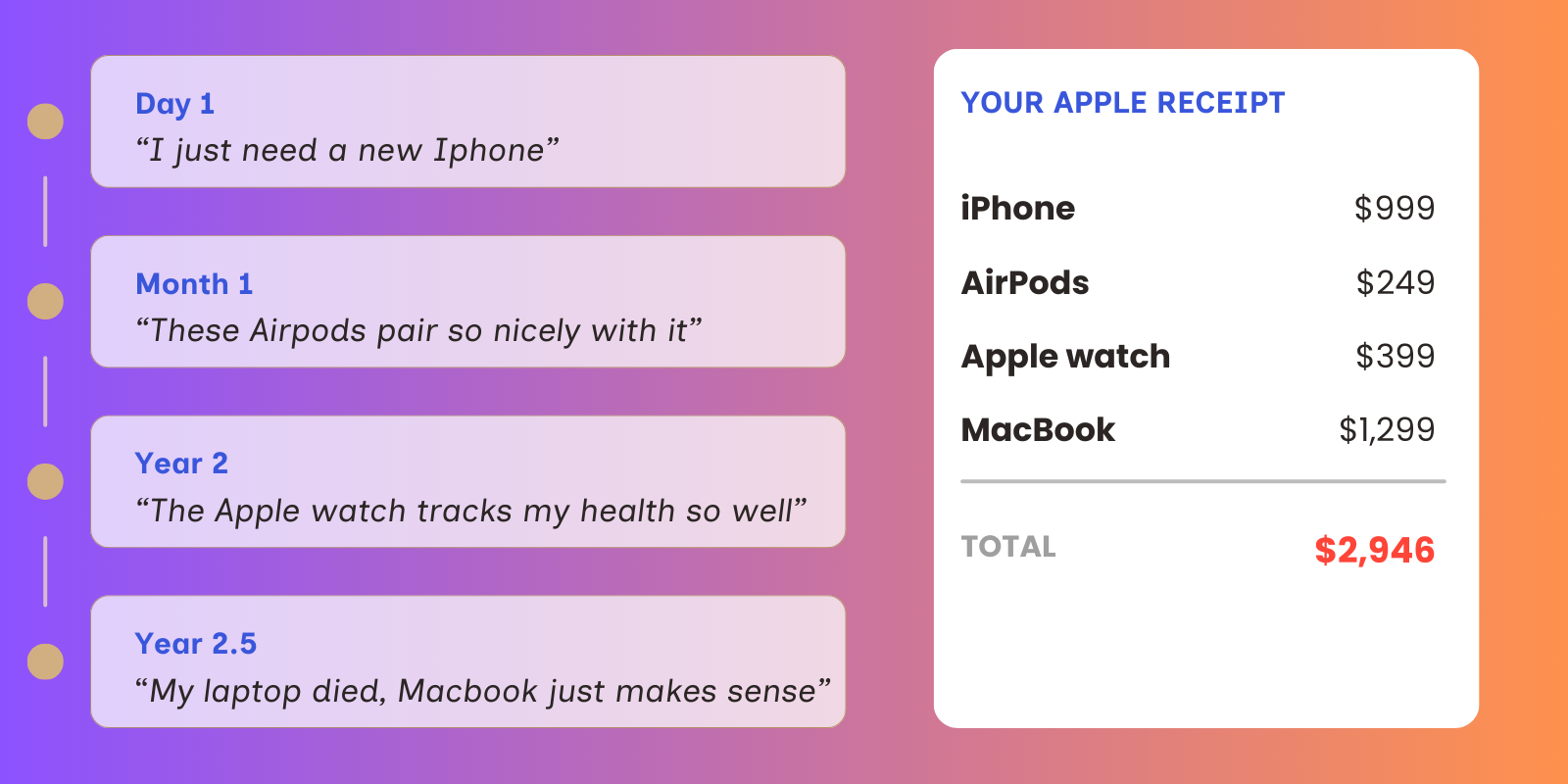
This isn't necessarily bad. But go in with your eyes open. A $999 iPhone might be the start of a $3,000+ journey.
Step 5: How long will you actually keep it?
This is the single biggest factor. The longer you keep it, the cheaper it gets.
Cost per month of a $999 iPhone
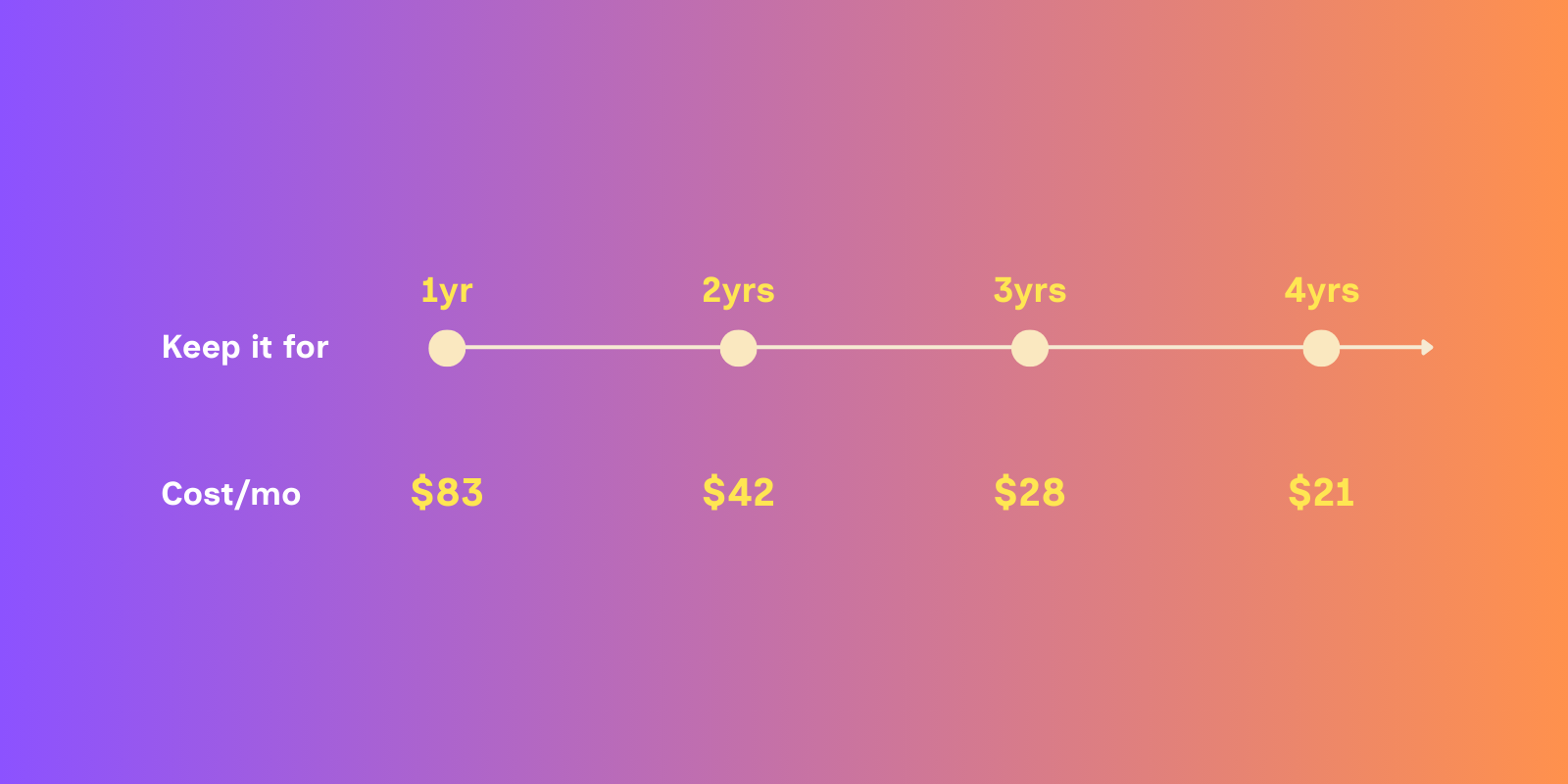
The sweet spot is 3 years. Battery is still solid, you're still getting iOS updates, and the camera holds up. Upgrading every year? You're paying $83/month to have a slightly better camera.
The final decision
It's worth it if:
- Your current phone is 3+ years old and struggling
- You already own other Apple products (the ecosystem value is real)
- You'll keep it for at least 3 years
- You can pay for it without stretching your budget
It's probably not worth it if:
- You're upgrading from last year's model (the difference is minimal)
- You're financing it because you can't afford it upfront
- You don't use any other Apple products
- A $300-500 phone covers everything you actually do with it
Bottom line: An iPhone isn't a $799 purchase. It's $1,200+ on day one, $200-400/year in ongoing costs, and potentially $3,000+ if the ecosystem pulls you in. None of that is bad if you planned for it. Just know the real number before you tap "Add to Cart."
Plug your actual numbers into our calculator below and see what an iPhone really costs relative to your income. Then decide.
Because the question isn't "is an iPhone worth it." The question is "is it worth it for you, right now, with your money."
And only your numbers can answer that.
Is Netflix worth it in 2026? - a real example of evaluating whether a subscription is worth keeping.